
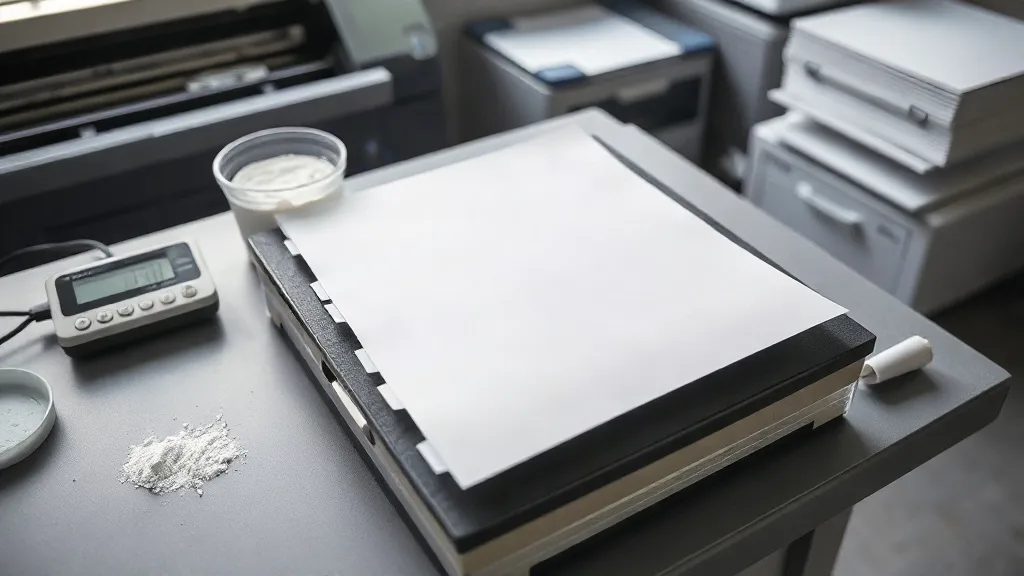
You can dial in your press to the degree and still watch a print crack after three washes. The culprit is often not the heat or the pressure but the two consumables you rarely think about: film and powder. Most dtf transfers failures that get blamed on the press trace back to a mismatch between the film's coating, the powder's melt point, and the environment where you store them. This guide walks through what actually matters when you pick film and adhesive powder, how to test a new batch before it hits production, and the storage habits that keep a $0.40 sheet from turning into a $4 reprint.
Why film and powder deserve more attention than they get
In a typical DTF workflow, the printer lays down color and white ink onto a coated PET film, then a shaker covers the wet ink with thermoplastic polyurethane powder. The powder fuses in an oven or under heat, and the sheet is either stored or pressed onto a garment. Every one of those steps depends on the film accepting ink evenly and the powder melting into a continuous layer. When either fails, you get pinholes in the white, powder that blows off during pressing, or a print that feels like sandpaper because the particles never fully coalesced.
Shops that run dtf at volume tend to treat film and powder as a single system. They don't buy the cheapest roll and the cheapest bag independently; they test the pair together, on the fabrics they actually sell, and they keep notes on which lot numbers worked. That habit alone prevents most of the cracking and dull-color complaints that show up weeks after delivery.
Film: what the coating actually does
DTF film is not just PET. It carries a release coating that lets the ink transfer cleanly to the garment and a matte or glossy finish that affects how the white layer sits. Thicker films (often 100 micron and up) hold more ink and resist curling in the oven, which matters if you run large gang sheets. Thinner films (75 micron and below) feel softer on the garment after pressing and are easier to peel cold, but they can wrinkle if your printer's platen isn't perfectly flat.
Cold peel vs. hot peel film
Hot peel film lets you remove the carrier while the print is still warm, which speeds up production but demands a consistent press and a steady hand. Cold peel film requires the sheet to cool completely, typically 30 to 60 seconds, before you peel. Cold peel is more forgiving for beginners and for shops without a cooling station, but it slows your throughput. Pick one type and build your workflow around it; mixing hot and cold peel film in the same day is how operators end up peeling too early and pulling the white layer apart.
Matte vs. glossy film
Matte film tends to hold powder more evenly because the surface has more tooth. Glossy film releases ink more cleanly but can cause powder to slide off the wet white if your shaker is set too aggressively. If you print a lot of fine detail or small text, matte film usually gives you a cleaner edge. If you print large solid blocks of white, glossy film can reduce the amount of powder you waste.
Powder: mesh size, melt point, and humidity
TPU powder comes in different mesh sizes, typically 80, 100, and 120. Lower mesh numbers mean coarser particles that melt into a thicker, more durable layer; higher mesh numbers mean finer particles that feel softer but can leave a slightly thinner adhesive layer. For garments that will be washed hard, like workwear or kids' shirts, a coarser powder (80 to 100 mesh) usually holds up better. For fashion tees where hand feel matters, 120 mesh is the better choice.
Melt point matters just as much. Most DTF powders activate between 110°C and 130°C, but the exact range varies by supplier. If your powder's melt point is higher than your press temperature, the adhesive never fully flows into the fabric, and the print lifts at the edges after the first wash. Always check the technical data sheet and run a test press at the low end of your normal range before committing a full roll.
The humidity problem
TPU powder is hygroscopic, meaning it absorbs moisture from the air. A bag left open in a humid shop will clump, and clumped powder melts unevenly, leaving hard spots that crack. Store powder in a sealed container with a desiccant pack, and if you live in a humid climate, consider a small dehumidifier near your powder station. Film has a similar issue: sheets stored in damp conditions can curl or develop a hazy coating that rejects ink. Keep both in a cool, dry cabinet, and rotate stock so older film gets used first.
How to test a new film and powder combination
Before you commit a production run to a new supplier, run a simple four-part test. It takes about 20 minutes and saves hours of reprints.
- Print a test sheet with a mix of fine text, a solid white block, and a gradient. This shows how the film handles different ink loads.
- Powder and cure as you normally would, then inspect the sheet under a bright light for pinholes, powder clumps, or uneven white.
- Press onto two fabrics: one 100% cotton and one 50/50 blend. Press at your standard settings, then peel according to the film type.
- Wash and stretch. After 24 hours, wash the samples in warm water and tumble dry low. Then stretch the print firmly in both directions. Cracking or lifting here means the powder or film isn't right for that fabric.
Keep a log of the results. Lot numbers change, and a film that worked in March may behave differently in July if your shop's humidity swings.
Matching film and powder to your production style
High-volume shops that run gang sheets all day should prioritize film that resists curling and powder that flows consistently through the shaker. Low-volume shops that print on demand can afford to keep two film types on hand: a hot peel for rush orders and a cold peel for detailed work. Either way, buy film and powder from the same supplier when possible, because they've likely tested the pair together.
If you're sourcing dtf transfers near me for local pickup, ask the supplier which film and powder they use and whether they've tested it on the fabrics you sell. A supplier who can answer that question is usually the one who will still be around when you need a rush order in December.
Storage and handling that protect your investment
Film should be stored vertically in its original box, away from direct sunlight and heat sources. Rolls that sit on a shelf for months can develop flat spots or edge curl. Powder should stay in a sealed container, and any leftover powder from a shaker tray should be sifted before reuse to remove clumps and lint. Keep a small notebook or spreadsheet tracking when each roll was opened and when each powder bag was sealed. That record is the difference between a smooth production week and a panicked reprint the day before a deadline.
Frequently asked questions
Can I mix different brands of film and powder?
You can, but test first. Film coatings and powder melt points are designed as a system. A mismatch can cause powder to blow off or the print to feel gritty. Run the four-part test before committing to a mixed batch.
How do I know if my powder has absorbed moisture?
Look for clumps in the bag or shaker tray, and press a small amount between your fingers. Fresh powder flows like fine sand; damp powder feels sticky or leaves a residue. If in doubt, dry a small batch in an oven at low temperature and retest.
Does film thickness affect wash durability?
Indirectly, yes. Thicker film holds more ink and powder, which can create a thicker adhesive layer, but durability depends more on correct powder melt and press settings. A thin film with properly cured powder will outlast a thick film with under-melted powder.
What's the best film for beginners?
Cold peel matte film in the 75 to 100 micron range. It's forgiving on peel timing, holds powder well, and feels soft on the garment. Once you're comfortable with press consistency, you can experiment with hot peel for speed.