
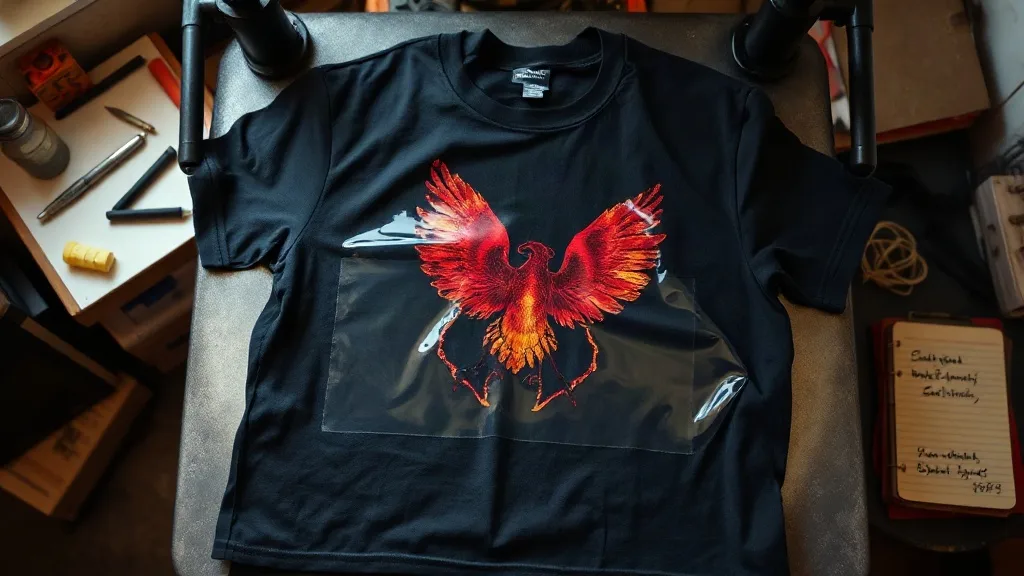
You pull a shirt out of the dryer, flip it over, and there it is: a hairline crack running straight through the middle of a graphic you were proud of two weeks ago. If you print or sell decorated apparel, this moment stings. It also tends to repeat itself until you understand what is actually happening between the film, the powder, and the fabric. This article digs into the physical reasons dtf transfers crack, stiffen, or peel, and it gives you a working process you can test in your own shop this week.
Most people blame the transfer itself. In practice, failures usually come from a chain of small decisions: how the film was stored, how the press was set, how the garment was handled while hot, and how the finished piece was washed. Fix the chain and the prints hold. Skip one link and you get a return request.
What Actually Happens When a DTF Print Cracks
A dtf print is not ink sitting on top of fabric. It is a thin layer of pigment ink bonded to a thermoplastic adhesive film that has been melted into the weave of the garment. That bond is mechanical, not chemical. The adhesive has to flow into the fibers and lock around them. When the adhesive never fully flows, or when it flows and then gets stressed before it sets, the print sits on the surface like a sticker. Stickers crack.
The ink layer itself also has an elastic limit. Pigment inks plus the hot-melt powder form a film that can stretch a certain amount before it tears. Cotton jersey stretches a lot. If the print is applied too thick, or cured too hard, or pressed onto a fabric that moves more than the film can follow, the first real stretch in a washing machine will find the weakest point and split it.
The three failure points worth memorizing
- Incomplete adhesive flow: the powder did not fully melt into the fabric, so the print floats and shears off in thin flakes.
- Over-cured or over-pressed film: the ink layer becomes brittle and loses its ability to flex with the garment.
- Mechanical stress while hot: peeling the carrier too early, stretching the shirt off the platen, or stacking hot garments forces the bond to fail before it has cooled.
Temperature, Pressure, and Time: Getting the Triangle Right
Every heat press decision involves three variables, and adjusting one changes the others. This is where most operators get into trouble, because they copy a setting from a forum and never verify it against their own equipment.
Temperature
Most DTF films are designed to press in the 150 to 165 degrees Celsius range, though you should always follow the spec sheet that came with your film. Too low and the powder never fully melts, which produces a print that feels slightly grainy and lifts at the edges after a few washes. Too high and you scorch the adhesive, dye-migrate light garments, and embrittle the ink layer. A cheap infrared thermometer pointed at the platen will tell you more about your press than the digital display ever will.
Pressure
Pressure is the variable people ignore, and it matters as much as heat. Medium pressure is usually right: firm enough that you can see the fabric texture through the carrier film, but not so firm that the adhesive squeezes out past the edge of the graphic. If you are pressing on a press with a worn silicone pad, the center of the platen may receive far less pressure than the edges, which is why some prints fail in the middle and hold at the corners.
Time and peel technique
Most films are either hot peel or cold peel, and mixing the two up is a classic cause of cracked prints. A cold-peel film pulled while still warm will stretch the adhesive before it sets, and the damage often does not show up until the first wash. If your film is cold peel, let the garment cool completely, ideally on a flat surface rather than draped over something that curves the print.
Fabric Choice Changes Everything
The same transfer behaves completely differently on a 100 percent cotton tee and a polyester performance shirt. Cotton absorbs and holds the adhesive well but stretches, so the film needs enough elasticity to follow. Polyester blends are smoother and often need lower temperatures to avoid dye migration, and some synthetics repel the adhesive if they carry a silicone finish or a heavy stain-release coating.
This is why the answer to dtf transfers near me searches is rarely just about convenience. A local supplier who can tell you which film works on which fabric, and who will answer a question about a specific garment, saves you far more money than a slightly cheaper roll that fails on half your catalog.
Fabric and film matching at a glance
- 100% cotton: forgiving, presses easily, watch for stretch and shrinkage.
- Cotton/poly blends: the sweet spot for most shops, good adhesion and moderate stretch.
- 100% polyester: lower temperature, watch for dye migration on light colors, test sublimation-prone fabrics first.
- Nylon and coated synthetics: test every batch, some finishes reject the adhesive entirely.
Storage and Handling Before the Print Ever Touches a Press
A surprising number of failures start in the storage bin. DTF film is sensitive to humidity, and powder that has absorbed moisture from the air will not melt cleanly. It clumps, cures unevenly, and leaves you with a print that looks fine on the press but fails in the wash. Keep film sealed, keep the shop below roughly 60 percent relative humidity where you can, and rotate stock so older rolls get used first.
Printed film that has already been powdered should be stored flat and used within a reasonable window. If you print in advance for a busy season, write the date on the bag. A roll printed three months ago and left in a warm room will not perform like one printed yesterday, and you want to know that before you press a hundred pieces.
Wash Testing: The Habit That Separates Pros From Hobbyists
If you only take one thing from this article, make it this: wash a sample before you sell a run. Press a test piece from every new roll, every new garment style, and every new press operator. Run it through five wash cycles inside out, with a normal detergent, and inspect it after each one.
You are looking for three things. First, edge lift, which points to incomplete adhesive flow. Second, fine cracking across the print, which points to over-curing or too much pressure. Third, stiffness, which tells you the ink deposit is too heavy for the fabric. Log the results with the settings you used. Within a month you will have a settings sheet built from your own equipment rather than guesswork, and that sheet is worth more than any generic guide.
Common Mistakes That Shorten Print Life
- Pressing on a damp garment. Moisture turns to steam under the platen and prevents proper bonding. Pre-press for a few seconds to drive off residual moisture.
- Skipping the pre-press. Wrinkles and fabric finishes block the adhesive. A quick press before applying the transfer makes a visible difference.
- Stacking hot garments. Heat trapped between layers keeps the adhesive soft and lets the print shift. Let pieces cool flat.
- Using a household iron. Irons apply uneven pressure and no consistent temperature. They are fine for a one-off, not for anything you sell.
- Ignoring the carrier film instructions. Hot peel and cold peel are not interchangeable, and neither are the temperature ranges across different film brands.
Frequently Asked Questions
Why did my DTF print crack after just one wash?
One-wash failures almost always come down to incomplete adhesive melt or peeling the carrier too early. Check your platen temperature with an external thermometer, confirm you are using the correct peel type for your film, and let the garment cool completely before handling. If the cracking is fine and all over, over-curing is the more likely culprit.
Can I fix a cracked DTF print once it has already failed?
Not really. Once the ink layer has split, re-pressing will flatten it slightly but the crack line remains visible and will reopen. The practical fix is removal and re-application. For a client order, replace the garment. For your own sample, use it as a wash-test reference so you can see exactly what went wrong.
Does DTF work on polyester performance wear?
Yes, but it needs care. Lower your press temperature to protect against dye migration, especially on white and light garments, and test every new fabric style before committing to a run. Some performance fabrics carry finishes that resist the adhesive, so a quick wash test on a single piece is always worth the few minutes it costs.
How long should a properly applied DTF print last?
With correct application and normal care, most DTF prints hold up well across dozens of wash cycles. Longevity depends heavily on the fabric, the ink deposit, and how the garment is washed. Inside-out washing in cold water and tumble drying on low will extend the life of any print considerably compared to hot water and high heat.
Do I need a special press for DTF film?
Any heat press that holds a consistent temperature and offers adjustable pressure will work. What matters is calibration, not brand. Verify your platen temperature with an infrared thermometer, check that pressure is even across the surface, and record the settings that give you a clean wash test. That routine will outperform an expensive press that nobody has calibrated.