
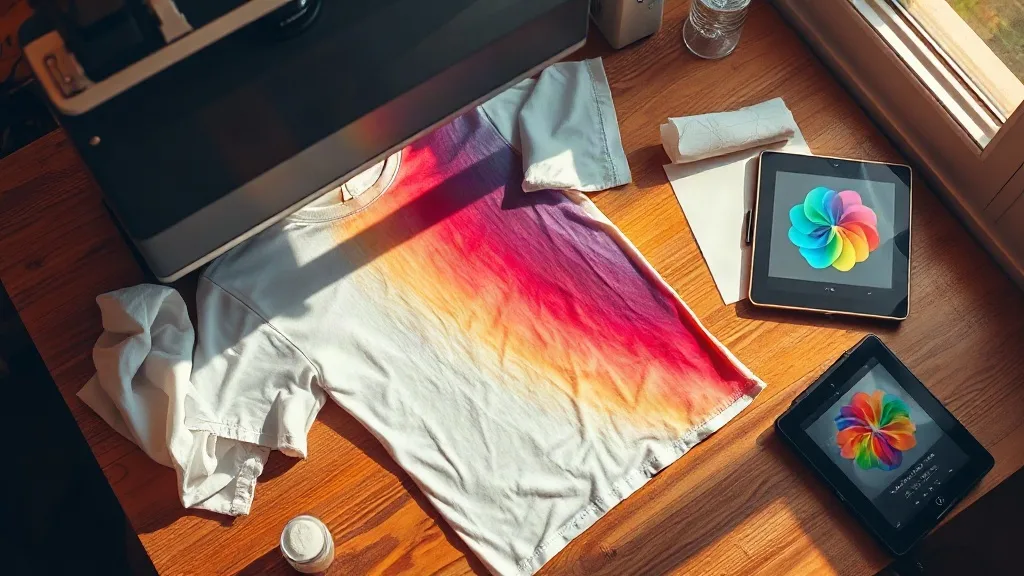
Most people meet dtf transfers by accident. They order a custom shirt from a small shop, wear it for a season, and notice the print still bends with the fabric instead of sitting on top of it like a stiff badge. That flexibility is the whole point of the method, and it explains why the technique moved from industrial floors into garages, craft rooms, and one-person apparel brands in just a few years. This guide walks through what actually happens between a digital file and a finished garment, where the process shines, and which habits separate a print that lasts from one that fails.
What a DTF Transfer Really Is
Direct to film printing flips the usual order of operations. Instead of printing directly onto a shirt, a printer lays ink onto a special coated film, then scatters a thermoplastic powder over the wet ink while it is still tacky. That powder is what makes the design able to bond to fabric later. The sheet goes through a curing step, the excess powder is shaken off, and what remains is a thin, flexible layer of pigment fused to a carrier film.
To apply it, you place the film powder-side down on the garment, cover it with a pressing sheet, and apply heat and pressure. The powder melts into the fibers. Once the film cools and peels away, the design stays behind. There is no weeding, no cutting around tiny letters, and no separate vinyl layer for each color. For anyone who has spent an evening picking at a weeding hook, that difference alone is worth understanding.
Film, Powder, and Ink: The Three Ingredients
Each component does a specific job, and problems usually trace back to one of them. The film carries the design and releases cleanly when it is cool. The powder, often called hot melt adhesive, determines how well the print grips the fabric. The ink provides color and opacity, including a white underbase that lets bright designs sit on dark shirts without turning muddy.
When a print peels, the powder did not fully melt or the fabric was not dry. When a print looks dull, the white layer was too thin or the press ran too cool. When edges crack, the film was stretched during application or the peel happened before the sheet cooled. Learning to read these symptoms saves a lot of wasted blanks.
Why the Method Suits Small Runs and Odd Fabrics
Screen printing rewards volume. Setup costs spread out across hundreds of pieces, and the per-unit price drops accordingly. dtf printing works the other way: the first shirt costs almost the same as the hundredth, which makes it a natural fit for sample runs, custom orders, team names, and designs with dozens of colors or photographic gradients.
Fabric range is the other advantage. Cotton, polyester, blends, canvas, and even some nylon and leather goods accept a transfer when the settings are right. That flexibility matters for anyone printing on tote bags, aprons, and performance wear in the same week without keeping a separate process for each substrate.
Where It Struggles
Honesty helps here. Heavily textured fabrics such as ribbed knits, terry cloth, and coarse canvas can leave gaps because the powder cannot reach into deep valleys in the weave. Stretch fabrics need a powder with more elasticity, and garments with water-repellent finishes often reject adhesion entirely until they are washed. Very dark, heavily dyed fabrics can also bleed into a light print over time if the garment was not pre-washed or if the press temperature pushed the dye upward.
Press Settings That Actually Work
Numbers float around the internet without much context, so treat any single recipe as a starting point rather than a law. The variables that matter are temperature, pressure, time, and peel method, and they interact. A slightly cooler press with longer dwell time often beats a hot, fast press that scorches the film.
- Temperature: Most films sit in a comfortable range around 150 to 165 degrees Celsius. Start in the middle and adjust based on how the powder behaves.
- Pressure: Medium to firm. You want the film to make full contact with the weave, but crushing the garment can create shine and flatten the hand feel.
- Time: Ten to fifteen seconds for the main press, plus a short second press after peeling to lock the edges.
- Peel: Cool peel is standard. Pulling hot stretches the design and leaves jagged edges.
Pre-pressing the garment for a few seconds is not optional. Moisture trapped in cotton turns to steam under the film and creates bubbles that never fully settle. A five-second pass also smooths wrinkles that would otherwise show up as thin spots in the print.
The Second Press Nobody Talks About
After the carrier film comes off, covering the design with a pressing sheet or parchment and pressing again for five to eight seconds does two things. It re-melts any powder at the edges that cooled during the peel, and it presses the print into the fabric for a softer hand. Skipping this step is one of the most common reasons a print that looked perfect in the shop starts lifting at the corners after a few washes.
Finding a Supplier Without Guesswork
Searching for dtf transfers near me usually returns a mix of local print shops, online gang sheet services, and resellers with wildly different quality. A few checks narrow the field quickly. Ask what powder they use and whether it is suited to stretch fabrics if you print on performance wear. Request a sample sheet and press it yourself before committing to a bulk order. Look at how they handle color management, because a supplier who cannot explain their white ink laydown will struggle with fine detail on dark garments.
Turnaround time matters more than most buyers expect. A shop that prints gang sheets daily can ship in a day or two, while a supplier who batches orders may take a week. If you are filling custom orders, that gap decides whether you can promise a delivery date.
Care Instructions Worth Passing On
Customers ruin prints mostly through heat and abrasion, not through bad printing. A short care note tucked into every order pays for itself in fewer complaints.
- Wash inside out in cold water on a gentle cycle.
- Skip fabric softener, which leaves a residue that can break down the adhesive over time.
- Tumble dry low or hang dry. High heat is the enemy.
- Iron on the reverse side only, and never directly on the print.
- Wait at least 24 hours after pressing before the first wash.
Following those five rules, a well-applied transfer on a cotton tee typically holds up through dozens of wash cycles with only mild softening of the hand feel. Prints that fail early usually trace back to moisture, insufficient pressure, or a hot peel.
Common Questions
Can I use DTF transfers on 100 percent polyester?
Yes, and the results are often excellent, but the settings change. Polyester is heat sensitive and can scorch or show press marks at higher temperatures, so drop the temperature slightly and shorten the dwell time. Use a pressing sheet and test on a scrap piece first, especially with darker colors that absorb heat faster.
How long do unused transfers keep?
Stored flat, away from humidity and direct sunlight, most cured transfers remain usable for six to twelve months. Humidity is the real threat because it affects the powder layer. A sealed bag with a desiccant pack solves most storage problems.
Do I need a commercial heat press?
A home iron can work for occasional projects, but consistency suffers. Pressure is uneven, temperature drifts, and the results vary from one garment to the next. A small clamshell press removes most of that uncertainty and pays for itself quickly if you print more than a handful of items a month.
Why did my transfer peel after the first wash?
Check three things in order: was the garment completely dry before pressing, was the pressure firm enough to push powder into the weave, and did you do the second press after peeling? In most cases one of those three steps was skipped, and the fix is straightforward on the next attempt.
Is DTF cheaper than vinyl for small orders?
For simple one-color designs on a few shirts, cut vinyl can be cheaper because the materials cost less. Once a design has multiple colors, gradients, or fine detail, the labor savings of a transfer outweigh the material difference. Time is usually the deciding factor.